Angle Clustering: The Antidote to Creative Fatigue
A top performing ad hits a wall after six weeks of stable CPAs. The daily spend drops, and the cost per acquisition climbs past the profitability threshold.
Misdiagnosing Angle Exhaustion as Visual Fatigue
The standard reaction from the creative team is to swap the visual packaging. They order a new creator for the opening three seconds, change the background music, and render a fresh batch of aspect ratios. Then they launch the refreshed assets into the account, but the CPA barely moves.
The team misdiagnosed the problem. They treated an exhausted argument as a visual fatigue issue. Audiences rarely stop converting because they're tired of a specific font or a specific influencer face. They stop converting because the psychological premise of the ad has saturated its available audience pocket.
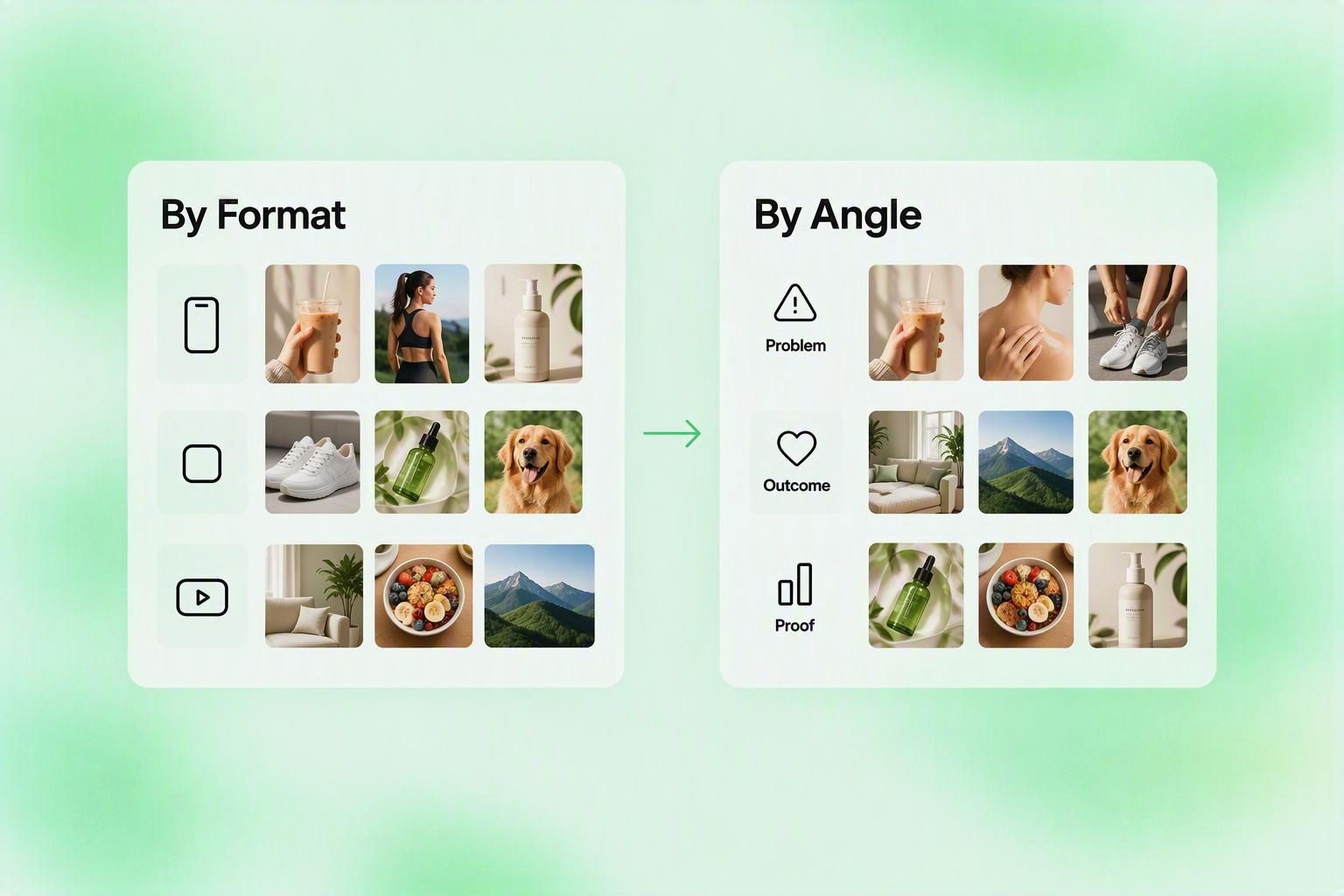
Angle clustering fixes this blind spot. Instead of organizing a creative library by format, like labeling assets as user generated content, motion graphics, or static images, you group them by the underlying business friction they resolve.
Consider a B2B SaaS platform selling inventory management. The team might have 40 active ads running. 10 are founder videos, 20 are customer testimonials, and 10 are static graphics. If every single one of those 40 ads leads with a promise about saving 10 hours a week on manual reporting, the account does not actually have 40 distinct ads. It has one active angle dressed in 40 different wrappers.
How Delivery Algorithms Exhaust Audience Pockets
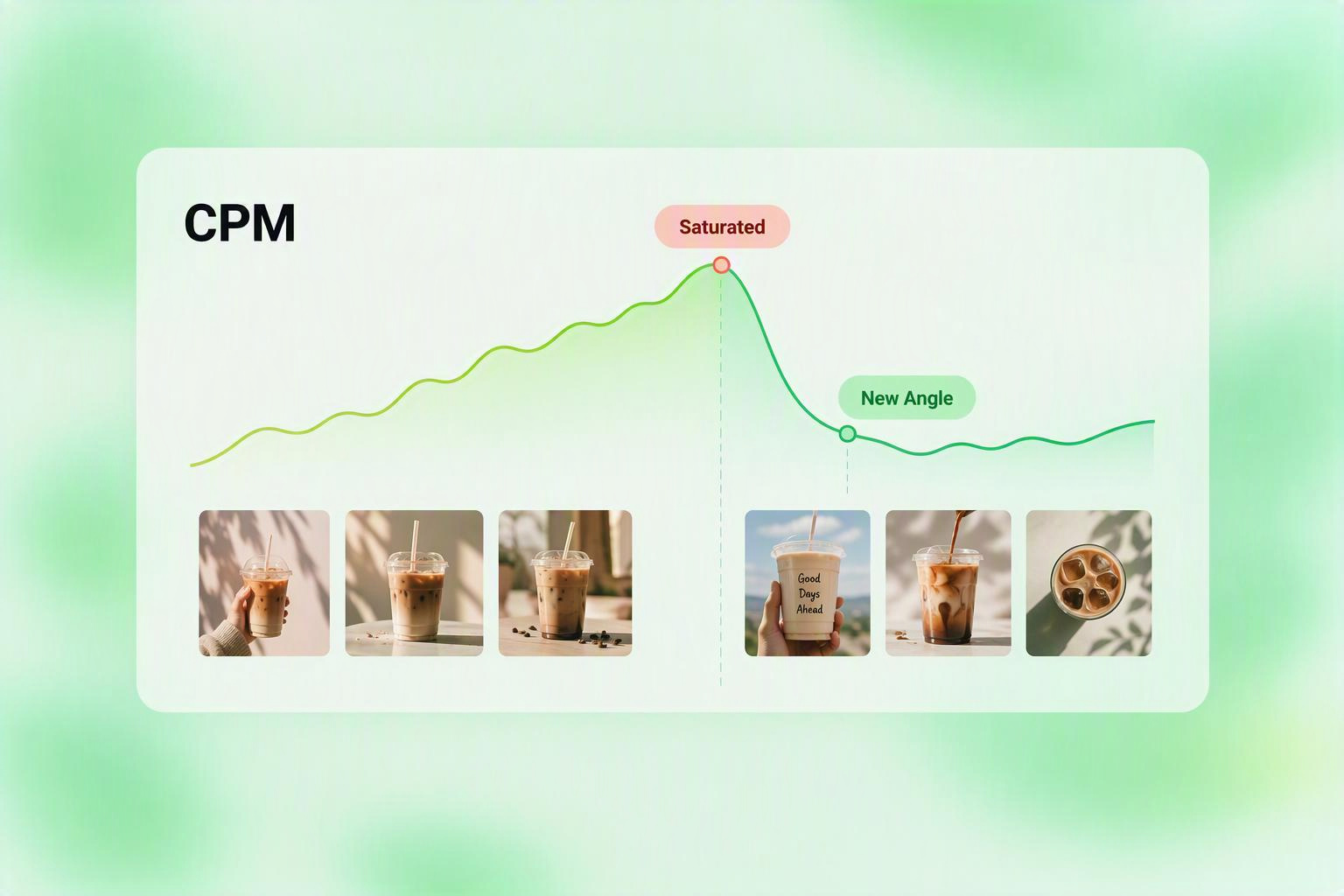
This distinction matters because of how delivery algorithms bid for attention. When an advertiser feeds a Meta Advantage+ campaign 10 different videos built around the same time-saving premise, the machine learning model seeks out the specific user cohort historically likely to respond to that specific trigger. The algorithm aggressively mines that narrow audience pocket until it runs out of cheap impressions. Clearing costs rise because the system is forced to bid higher to find the last remaining users who care about time savings.
Resetting Clearing Costs with Net-New Arguments
Launching another founder video about saving time will not lower the CPM. Forcing the delivery algorithm into a new, cheaper sub-auction requires feeding it a fundamentally different psychological hook.
If the saturated angle is about saving time, the new cluster needs to target cost consolidation, data security, or ease of onboarding for new employees. A fresh angle unlocks a fresh audience pocket, resetting the clearing cost. Testing creative this way prevents teams from burning production budget on variations of an argument the market has already rejected.
This same clustering framework applies directly to competitor research.
When growth leads monitor rival accounts, looking at the raw volume of creative formats is mostly noise. The strategic value comes from mapping the specific arguments competitors are willing to put money behind over extended periods. If three major competitors are all scaling ads heavily clustered around implementation speed, that specific narrative is going to be incredibly expensive to bid against. The auction is saturated with that exact message.
Spotting that saturation early allows a media buyer to pivot their testing budget. If the category is fighting over buyers who want fast implementation, the open white space might be the buyers who are frustrated by poor customer support. Testing that neglected cluster provides a clear path to scale without paying the premium for a crowded auction.
See what angles your competitors are scaling right now: Start Trial