How to Detect Competitor Scaling Signals in Paid Social

An account can run stable CPAs for months, only to see clearing CPMs on primary Advantage+ campaigns spike 35% over a four-day window.
Looking purely at the native Ads Manager, it usually looks like standard creative fatigue. The problem is that native dashboards give you zero macroeconomic context. Often, the root cause isn't fatigue at all. A direct competitor just raised capital or unlocked a winning hook, and they're suddenly dumping massive budget into the exact same auction pool.
Diagnosing External Bidding Collisions
When multiple advertisers force heavy spend into overlapping prospect pools with similar creative concepts, ad network delivery algorithms balance the load by raising the clearing cost. If your CPMs spike while your account structure remains untouched, you're likely facing an external bidding collision.
The challenge for growth teams is distinguishing between a competitor temporarily dumping cash for a week versus sustainably scaling a winning creative that will permanently alter the auction floor. You cannot log into their billing portal, but you can read the exhaust their scaling efforts leave behind in public transparency tools.
You have to filter for specific mechanical footprints.
Distinguishing Automation from Manual Format Spread
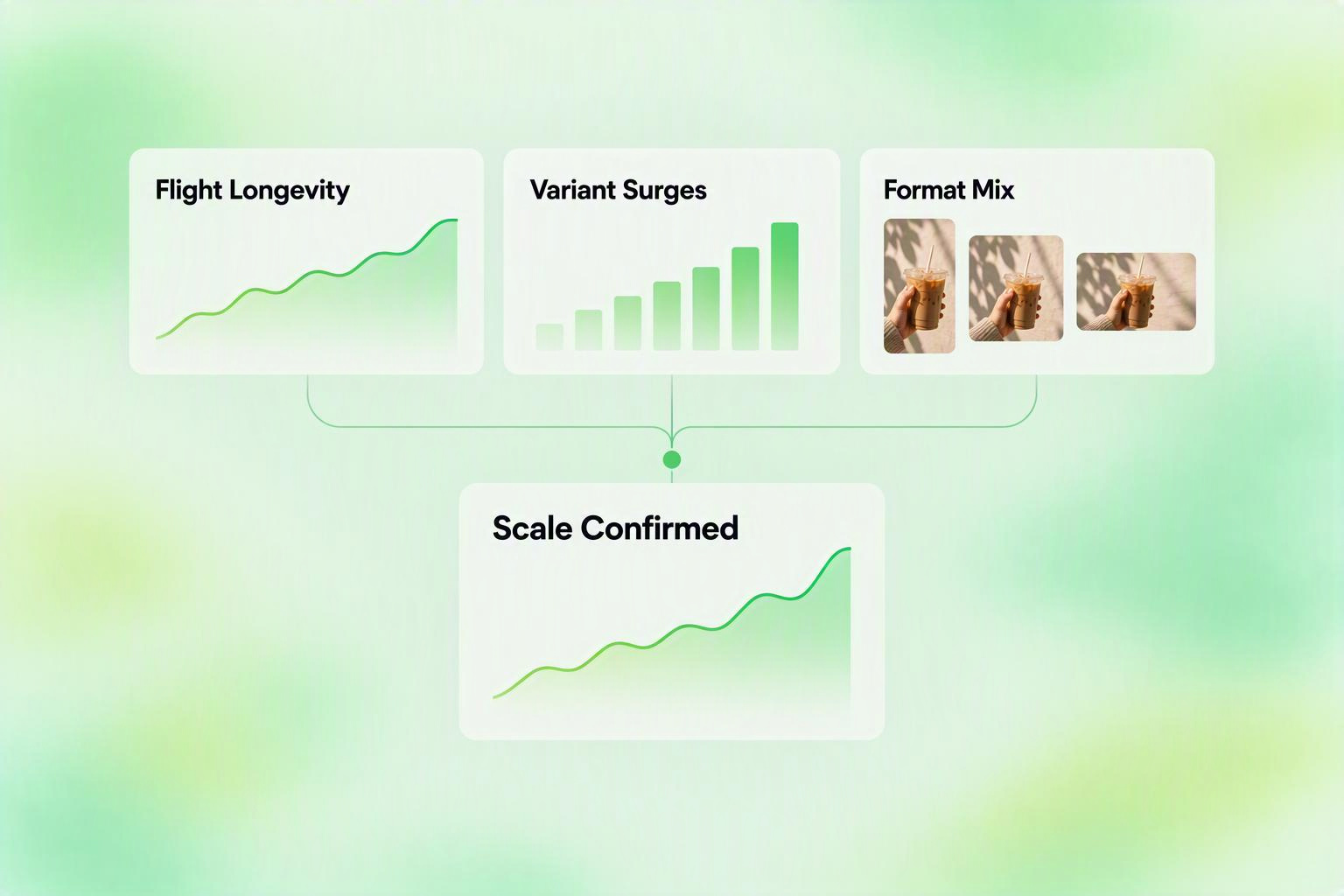
The first is placement and format spread. Small test budgets usually stay locked in default automated feeds. When an asset graduates to significant daily spend, the brand has to open the delivery floodgates so native algorithms can clear volume without hitting frequency caps. You'll start seeing the core video asset rendered out specifically for 9:16 vertical placements like Reels and Shorts, alongside 1:1 crops for standard mobile feeds.
Be careful with how you read variant volume here. Meta and Google both have automated tools like Advantage+ Creative and Performance Max that automatically generate text overlays, crop images, and swap headlines without the media buyer lifting a finger. If a competitor's ad library suddenly shows 40 slightly different text variations of the exact same static image, that's usually just the algorithm doing its job. It does not necessarily mean they're scaling.
If you see fundamentally different aspect-ratio renders that require human post-production editing, like a custom vertical video edit paired with a custom landscape cut launched days apart, that indicates active human investment. It shows the team is dedicating actual creative hours to widen delivery for that specific thesis.
Validating Flight Duration with Territorial Expansion
Flight duration is the most frequently cited scaling metric, and it is frequently misinterpreted.
In a strict direct-response environment, losing ads get killed in a few days. An asset running continuously for 30 days is generally doing something right. Relying on run length alone creates massive blind spots. Legacy ad accounts are notorious for leaving old retargeting ad sets active on three-dollar-a-day budgets for eight months. In the public ad library, that low-spend retargeting ad looks exactly the same as their primary acquisition winner.
To filter out the low-spend noise, cross-reference flight duration with localization or multi-territory expansion. When spend reaches a high-volume ceiling in a primary market like the US, advertisers often try to scale horizontally. They will take a long-running winner and launch it in the UK, Australia, or Canada. Tracking an asset that has been running for three weeks in one country and suddenly appears cloned into three other English-speaking markets gives you a confirmed, scaled winner.
Spotting these surges early changes how a team operates inside their own account.
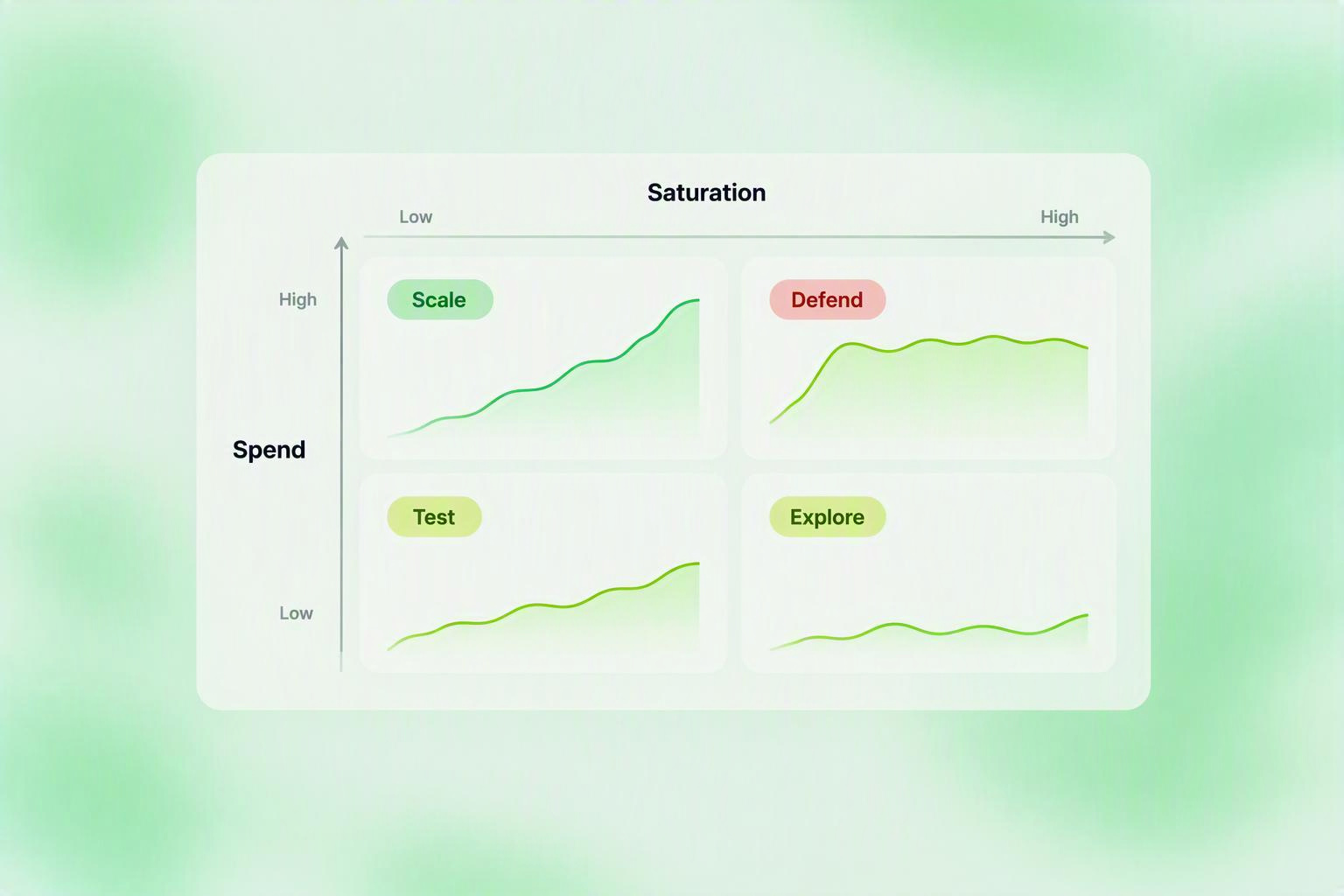
If external intelligence confirms a direct rival is aggressively scaling an angle that mirrors your own messaging, fighting them head-on is going to hurt your margins. You're entering an auction where the delivery system is already favoring their historical conversion volume.
Instead of duplicating ad sets or raising bid caps to fight for the exact same clicks, testing budget can be shifted into angles where you hold unique narrative positioning. If they're scaling heavily on an implementation speed angle, active spend can pivot toward data security or integration depth. You step into sub-auctions with lower clearing costs while they pay the premium for the crowded audience.
See what your competitors are scaling right now: Start Trial