The High Cost of Siloed Testing: Why Operators Burn Margin on Solved Problems
A growth team maps out a massive creative testing sprint for a new product launch. They build 15 variations of user-generated content, deliberately split-testing first-person narrative scripts against third-person voiceovers. The media buyer loads everything into the account, and the brand spends $10,000 over three weeks to learn that the third-person angle fails to convert.
The issue is that three major competitors in their exact category ran that same test eight months prior. Those competitors killed the third-person concept after a few days and entirely consolidated their daily spend behind the first-person angle. The growth team just burned $10,000 of their own budget to discover a reality the market had already priced in.
Paying the Algorithmic Tax on Untested Hypotheses
Testing creative in an isolated silo is one of the most expensive habits in performance marketing. Teams often treat their own Ads Manager as the only source of truth. They dump five raw video hooks, three body copy variations, and two headlines into a Dynamic Creative setup and let the algorithm find the efficient path.
That process works mechanically, but it forces the brand to pay a steep machine learning tax. Every time you feed an algorithm a completely untested hypothesis, the system has to spend actual dollars serving bad combinations to audiences just to figure out they're bad.
Establishing a Market-Validated Testing Baseline
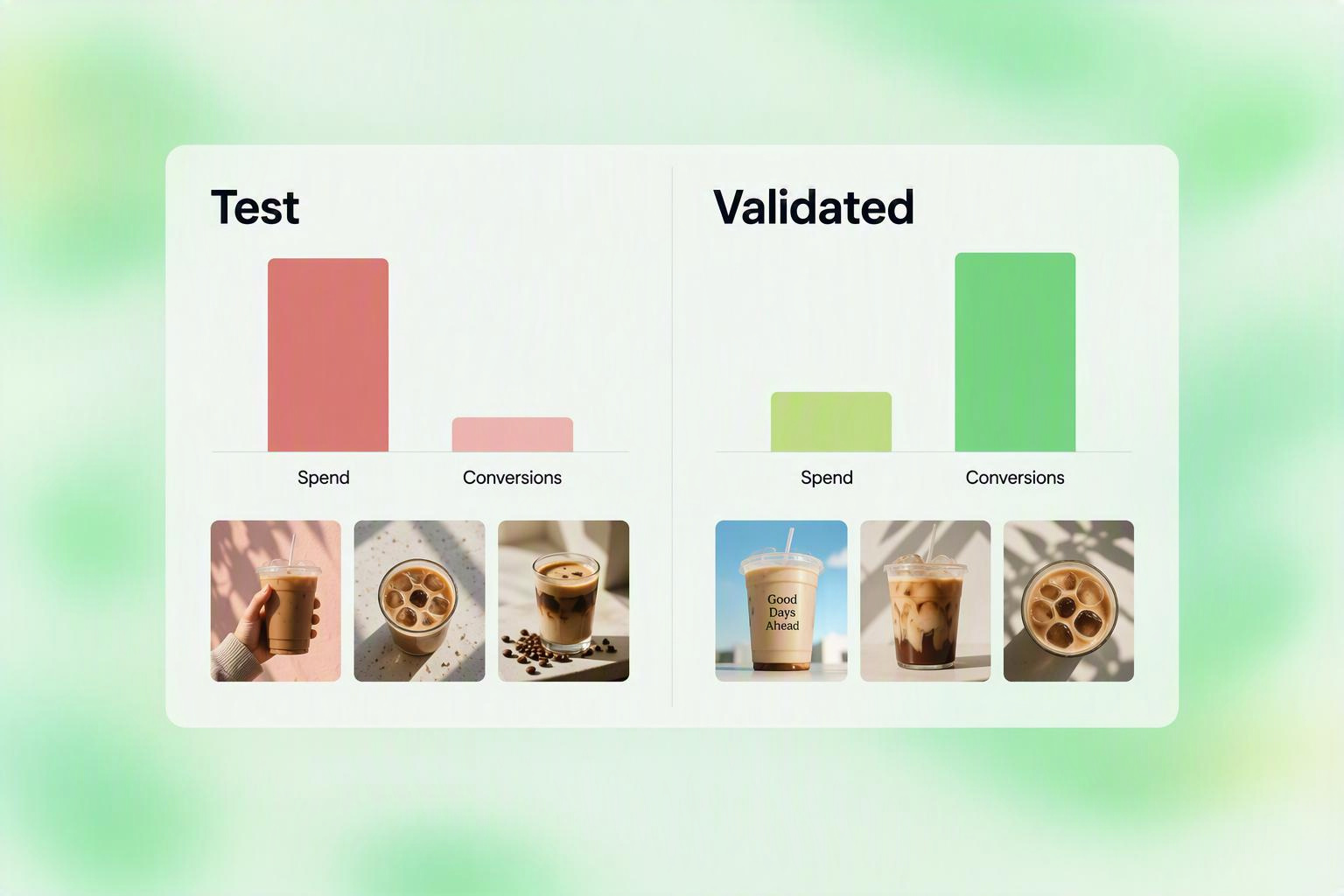
You can bypass that initial failure rate by using the broader category as a filter. If a direct competitor has been running a specific pricing comparison angle for 90 days across multiple aspect ratios, they already paid the testing tax to validate that premise.
Instead of starting from zero, a media buyer can start their own testing phase at that validated baseline. You take the proven angle and test variations of the execution. You test an aggressive text-overlay pacing, a different creator demographic, or a stronger risk-reversal guarantee. You let the competitors fund the expensive early-stage exploration.
Engineering Variations on Proven Category Hooks
This applies directly to core offer structures. Marketing teams frequently spend weeks debating whether to run ads promoting a 14-day free trial or a freemium tier. Checking the public ad footprint of the category usually reveals the answer before a single dollar is spent. If the heaviest spenders tested both and shifted all their format variations to the free trial, the market has already provided the directional signal.
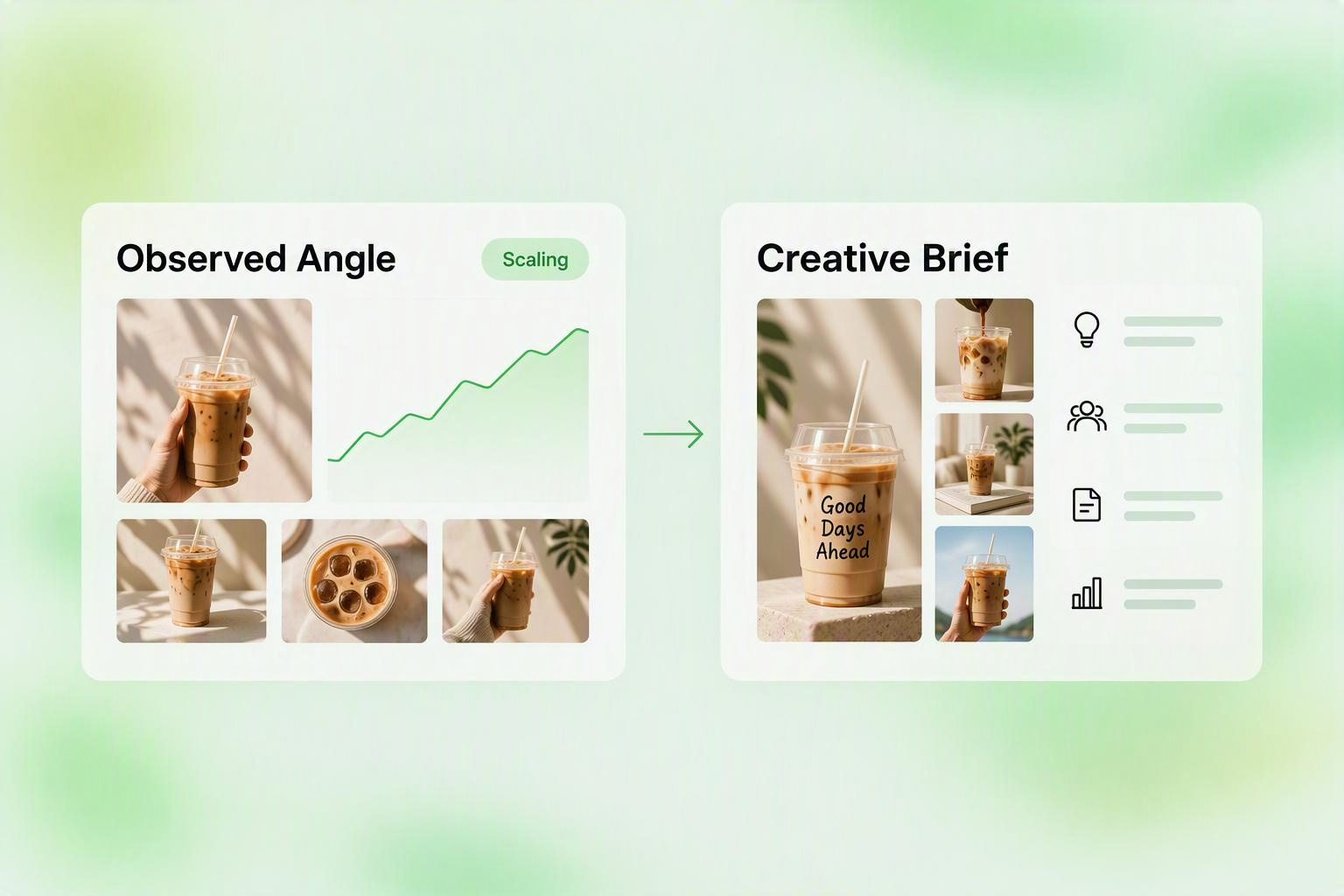
Creative briefs built in a vacuum guarantee a high initial failure rate. When a brief is grounded in category intelligence, you stop asking if a core argument works. You start asking how to execute it better than the brands currently paying to scale it.
See what your competitors are testing right now: Start Trial